
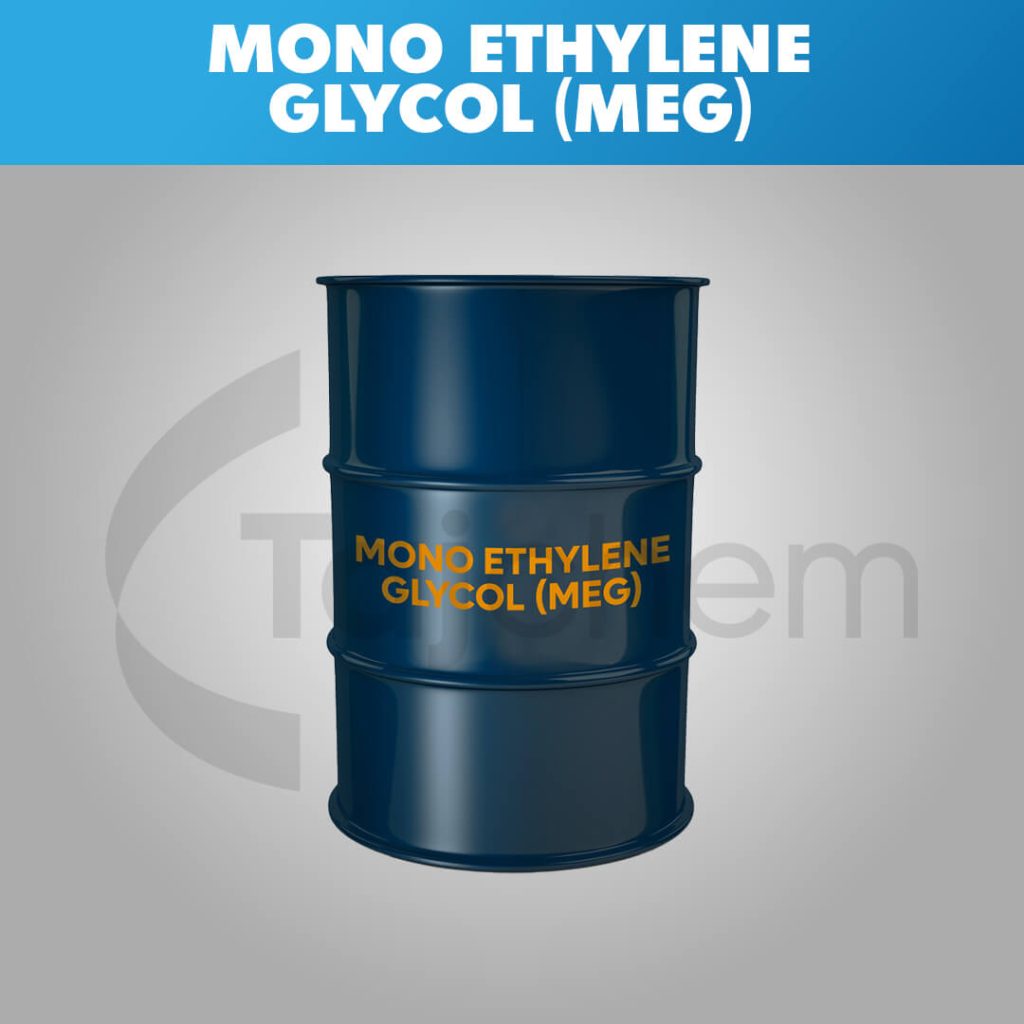
Monoethylene glycol (MEG) finds application in paints, coatings, and inks as a solvent, humectant, and plasticizer, enhancing their properties and performance. It acts as a wetting agent, improves flow, and helps control drying time, while also contributing to the formulation of alkyd resins used in various coatings.
Properties:
- Physical State: Clear, colorless, and slightly viscous liquid.
- Odor: Virtually odorless.
- Taste: Sweet taste.
- Miscibility: Miscible with water, alcohols, and many organic compounds.
- Hygroscopic: Absorbs moisture from the air.
- Volatility: Low volatility.
Applications:
Applications in Paints and Coatings:
- Solvent: MEG is used as a solvent in custom formulations of paints and coatings, helping to dissolve and disperse various components.
- Humectant: Being hygroscopic, MEG helps retain moisture in water-based paints, preventing premature drying and improving application properties.
- Plasticizer: It acts as a plasticizer, improving the flexibility and durability of coatings.
- Alkyd Resin Production: MEG is a key reactant in the production of alkyd resins, which are widely used in paints, enamels, and varnishes.
- Wetting Agent: MEG can act as a wetting agent, improving the spreading and adhesion of paints on surfaces.
Applications in Printing Inks: - Solvent: MEG acts as a solvent in printing inks, aiding in the dispersion of pigments and resins.
- Drying Retardant: In water-based inks, MEG can help to slow down the drying process, preventing rapid evaporation and allowing for better ink flow and transfer.
- Viscosity Control: MEG can be used to adjust the viscosity of inks, ensuring optimal print quality and flow.
- Wet-Edge Retention: It can improve the wet-edge time of inks, allowing for better overlapping of printed areas and preventing dry-out during printing.